Prototype surfaces
Donor app, agent, dispatch API, researcher portal
Volunteer compute infrastructure for cancer research
Apoptosis is building nonprofit infrastructure that can connect idle CPU and GPU capacity with verified cancer research teams— safely, transparently, and at meaningful scale.
Donor app, agent, dispatch API, researcher portal
Molecular, genomic, docking, and model validation
Independent execution before results are accepted
A controlled institutional proof before public scale
Architecture and pilot targets—not live research impact claims.
Why apoptosis?
Apoptosis is the process that tells damaged cells to self-destruct. Cancer learns to ignore that signal.
This project exists to put more computing power behind the researchers working to understand and restore it.Built in memory of Kait Shannon.
The opportunity
Modern cancer research depends on large, parallel workloads. Institutional infrastructure is essential, but suitable exploratory work can still compete for finite capacity. Meanwhile, powerful personal hardware spends long stretches idle. Apoptosis is engineering a trusted bridge between the two.
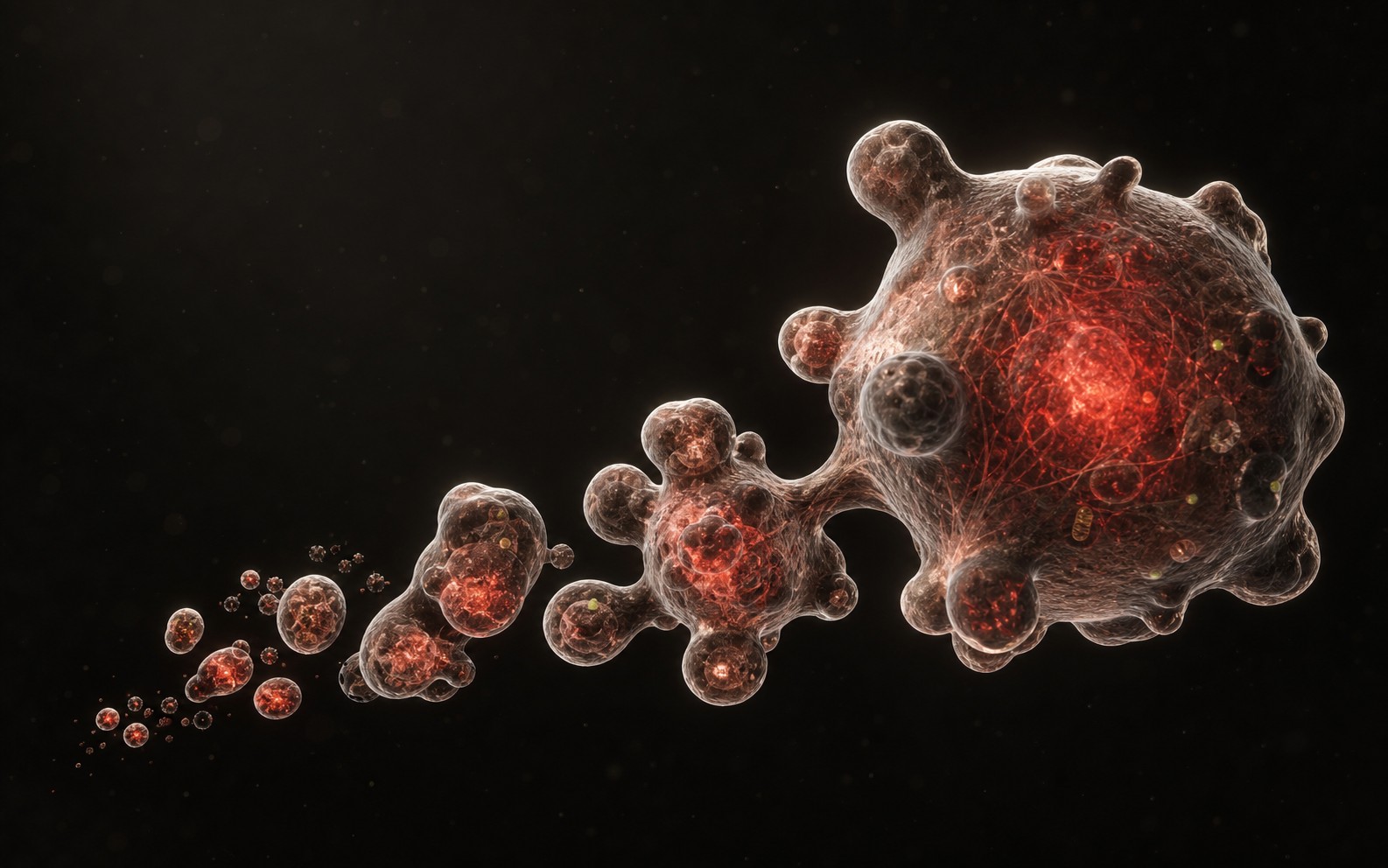
Apoptosis is controlled cell death. The project takes its name from the biological process cancer learns to evade.
Compute-intensive experiments can queue behind other institutional work, slowing iteration for smaller and early-stage teams.
Modern consumer CPUs and GPUs can contribute meaningful parallel work when the owner is not using them.
A reviewed dispatch layer can turn voluntary capacity into complementary research infrastructure.
Prototype code today
The current prototype models the full path from contributor control to research job submission. The next phase is not adding a prettier dashboard—it is validating the architecture under independent review and a real institutional workload.
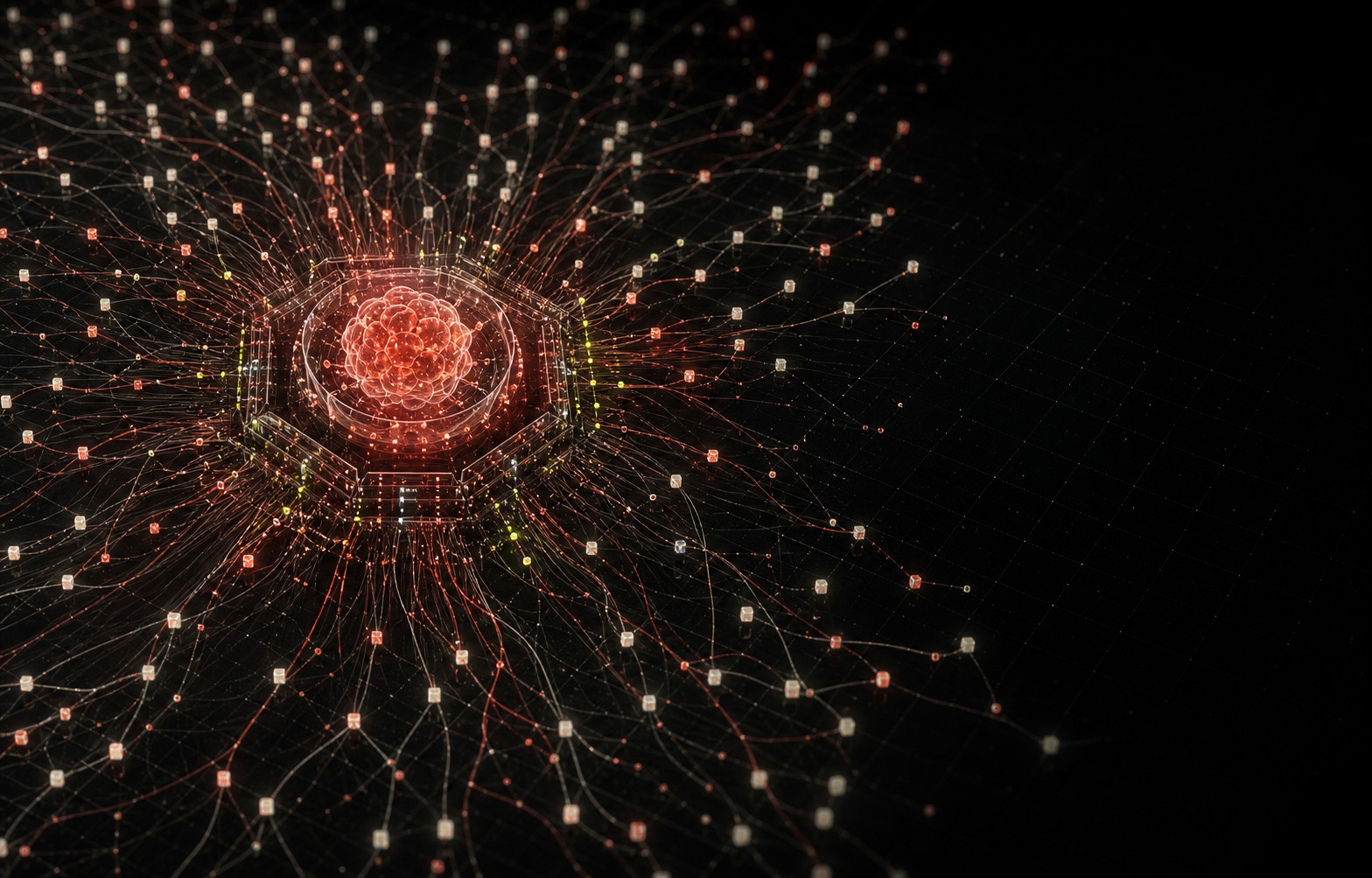
The value is not a single computer. It is a disciplined system for splitting work, enforcing limits, and checking results.
Node registration, live status, resource throttling, contribution history, and a visible pause control.
Heartbeat reporting, task receipt, isolated container execution, and fallback polling for resilient operation.
Authenticated APIs, job queues, real-time events, task assignment, timeout handling, and redundant result comparison.
Institutional applications, reviewed access, job submission, progress monitoring, and result retrieval.
One network, two communities
The contributor keeps control. The research institution keeps oversight. Apoptosis handles the secure coordination between them.
The donor chooses when the agent can run, how much capacity it may use, and when it should pause.
An approved institution submits a divisible, container-compatible workload for technical and security review.
Jobs are split, assigned, monitored, and checked before validated results are returned to the research team.
For future compute donors
For research teams
Trust before scale
Volunteer hardware should never require blind trust, and researchers should never accept unverifiable output. The platform is being built around controls that can be inspected, tested, and improved before public launch.
Institutional identity checks and manual review are part of the access model before a research workload reaches the network.
The architecture uses containerized jobs, resource limits, non-root execution, and network-isolated workloads on volunteer hardware.
The pilot design assigns task chunks to independent nodes and compares outputs before results are accepted.
The donor-side agent is intended for open release so contributors and reviewers can inspect what runs on a machine.
Security teams can request the prototype architecture and help define the independent review scope.
Review the security modelPilot workload families
Final pilot eligibility depends on data sensitivity, container design, expected runtime, hardware variance, and independent technical review.
Protein-folding and molecular-dynamics workflows such as OpenMM and GROMACS.
↗Parallel sequence-comparison workflows using tools such as BLAST and BWA.
↗High-volume ligand-docking batches for early-stage compound screening.
↗Divisible machine-learning training and validation jobs on approved datasets.
↗The first proof
The target is a 90-day institutional workload that can be compared against a trusted reference environment. Success is evidence—not vanity metrics.
From prototype to proof
Donor, researcher, dispatch, and job-management surfaces.
External review, adversarial testing, and remediation.
Measured results against an approved reference environment.
Open participation backed by published impact reporting.

About the founder
Hayden Murphy founded Apoptosis following the loss of his wife, Kait Shannon, to cancer. The project turns that loss toward a practical question: how can existing hardware help research teams move faster?
Hayden began his career in audio engineering, producing recordings in studios across North America before moving into technology and innovation research.
As a co-founder of Aerimos, he worked with Dr. Michael E. Shannon on delivery mechanisms, prototype redesigns, and advanced applications of sterilization and disinfection technology across chemical, mechanical, and applied systems.
He also worked with the late Peter Warton to design sound technologies for a reverberation-based acoustic defence system. That habit of crossing disciplines and turning complex ideas into working systems now informs Apoptosis.
This is not a marketing project that adopted a cause. The cause is why it was built.
Use the right ideas, regardless of where they originated.
Connect people, hardware, trust, and research—not just code.
Earn confidence through review, measurement, and evidence.
The founding network
Apoptosis is deliberately opening with partners, reviewers, and a controlled pilot—not a premature public download.
Research institutions
A suitable pilot is divisible, container-compatible, benchmarkable against trusted infrastructure, and free of identifiable patient data on donor machines.
Scope a pilotSecurity reviewers
The next readiness gate is an independent review of isolation, authentication, task integrity, and the donor threat model.
Review the modelHardware and funding partners
Support the security review, controlled pilot infrastructure, contributor hardware, or a mission-led launch to the gaming community.
Discuss sponsorshipFuture compute donors
Join the launch network now. Installation will open only after independent security review and pilot remediation.
Join the launch listClear answers
Not publicly yet. A technical prototype exists, but installation opens only after independent security review, remediation, and a controlled institutional pilot.
Strong candidates are divisible, container-compatible, tolerant of variable hardware, benchmarkable against a trusted reference, and do not require identifiable patient data on volunteer machines.
No. The goal is to complement trusted research infrastructure with elastic capacity for suitable workloads—not replace secure systems, ethics review, or institutional oversight.
The project documentation includes Canadian nonprofit, charitable registration, and US 501(c)(3) preparation materials. Those are filing plans, not a claim that current contributions are tax-deductible.
Research teams can propose a pilot workload. Security experts can support architecture review. Hardware and funding partners can help bring the first independently validated pilot online.
Founding partners wanted
Bring a pilot workload, challenge the security model, or help fund the first trusted proof of volunteer compute for cancer research.
get-apoptosis.online